
Water safety first. Water fun follows.
You don’t just want swim lessons. You want real skills and real peace of mind.
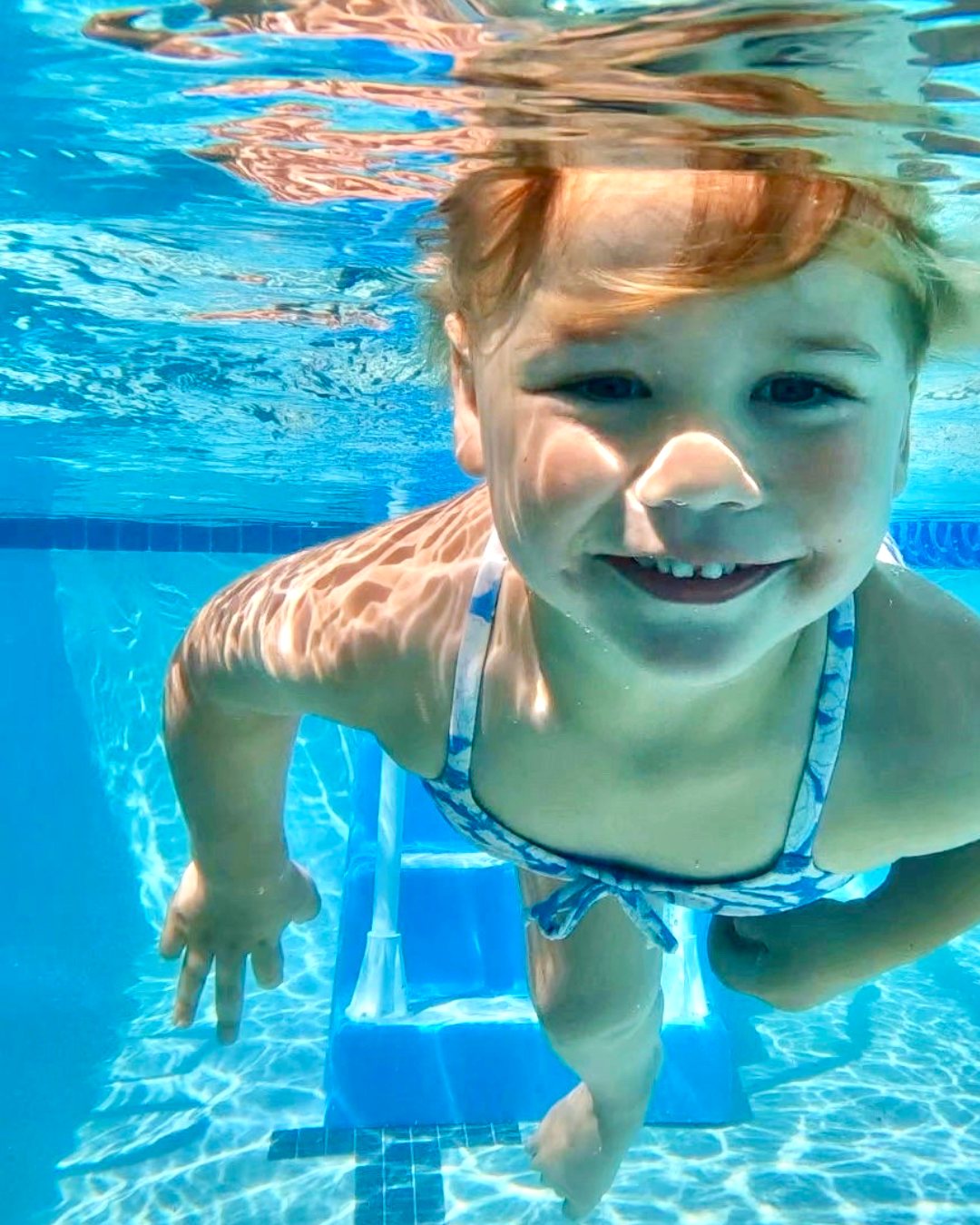
Survival swim lessons don’t have to feel intimidating.
Forget the rumors that survival lessons traumatize kids, or that they won’t actually learn to swim. The biggest misconception in the swim lesson industry is that survival swim is scary. My approach is designed to empower, not frighten, and the skills your child learns can last a lifetime.
A drowning accident is scary. Independence isn’t.
I’ve helped 400+ infants and toddlers learn to float, breathe and self-rescue in real-world scenarios. What sets my lessons apart is the standard I hold, the outcomes I deliver, and the peace of mind parents leave with.
The program at a glance
Short, daily and one-on-one.
10 min
Per lesson
5 days
A week
8 weeks
Approximate length
1:1
Private with Caitlin
Ages 6 months+
Learn to roll onto their back to float, rest and breathe.
Ages 2+
Learn the full swim-float-swim sequence to reach safety.
Real-world practice
In the final week, skills are practiced in clothing, the way an accident would actually happen.
After the program
Refresher lessons about every six months, plus optional weekly maintenance lessons.
Investment
Starts at $2,895. Payment plans available.
Enrollment
By application only.
Is this the right fit?
A great fit if
- You believe water safety is a non-negotiable life skill, not a seasonal activity.
- You want your child to learn real self-rescue skills, not just sing songs and splash around.
- You’re ready to prioritize consistency over convenience.
- You value expertise, results and clear communication over weekly group classes.
- You do your research, ask smart questions and show up fully when it matters most.
It may not be the right fit if
- You’re looking for casual water exposure or a once-a-week class.
- You aren’t ready to commit to the full program or to keeping skills up afterward.
- You’d prefer your child to set the pace of lessons rather than the instructor.
- Convenience matters more to you than results.
FAQs
Questions parents ask
Are children thrown or tossed into the pool?
No, never. Throwing or tossing a child into the water is unsafe, and it is never part of my lessons.
What if my child cries?
Crying is common when little ones learn a new skill, in a new place, with a new teacher. It’s how young children tell us something feels hard. It usually fades as their skills grow, and it doesn’t bother me or get in the way of learning.
What’s the best age to begin?
Lessons start at 6 months. Drowning risk begins once a baby can move on their own, like crawling. The best time to start is when your family is ready to commit to the initial lessons and the refresher or maintenance lessons that keep skills sharp.
How long and how often are lessons?
Each lesson is 10 minutes, 5 days a week, for about 8 weeks. Short daily lessons keep your child focused and learning.
Do parents get in the pool?
No. Parents stay on the sidelines, and you’re encouraged to cheer your little one on.
Do students practice in clothing?
Yes. In the final week, once your child has mastered their self-rescue skills, they practice in clothing to simulate a real-life scenario in a safe, controlled setting.
What are refresher and maintenance lessons?
Refresher lessons run Monday through Friday for two weeks, and I recommend them about every six months, though it varies by child. Maintenance lessons run once a week for five weeks, or ongoing if you choose. Both keep skills sharp and confidence growing.
Are survival swim lessons more expensive than traditional lessons?
The upfront cost can look higher, but your child learns lifesaving skills in weeks, not years. Traditional private lessons can run $400 a month for months or years, with slow progress and no guaranteed outcome. The program starts at $2,895, and payment plans are available.
Why is space limited?
Each session has no more than 10 new students; the remaining spots go to refresher and maintenance students. Keeping my days small lets me give every child my full attention and keep lessons as safe as possible.
Do you work with children with disabilities, or families affected by drowning?
Yes, to both. Depending on the diagnosis, your child’s pediatrician may need to approve lessons. Families who have experienced a fatal or non-fatal drowning will be supported through every step.
Are in-home lessons available?
Not currently, but I may offer them in the future. Join the in-home waitlist to be the first to know.
How do I sign up?
Join the notification list. You’ll get the lesson guide with dates and location, and an email with the application link when the next session opens.
Space is limited
A small number of families each session.
Each session has no more than 10 new students, and scheduling is by application only. I review every application personally and work with families who are fully committed to the process and to their child’s safety.
“I love how she is there for my kids and me. She will answer any and all questions I have throughout the lessons.”
CM SWIM CO parent
Get the lesson guide.
Join the notification list for session dates, the pool location and the application link when the next session opens.